Swiss Train Travel Guide
Key Takeaway: A 4-day Swiss Travel Pass for 2026 costs approximately $320 (CHF 281) and offers unlimited travel on the entire SBB network, including boats and buses. For a standard Zurich to Zermatt journey taking 3 hours and 12 minutes, the pass pays for itself if you include just one scenic mountain excursion. Book your Swiss Travel Pass online to skip the ticket office queues and head straight to the platform.
The doors hiss shut with a satisfying thud, and exactly on the second, the platform begins to slide away. You aren't just sitting on a train; you're participating in a synchronized Swiss dance that moves millions of people across Alpine peaks and turquoise lakes every single day. Train travel in Switzerland is arguably the only way to see the country without losing your mind to narrow mountain hairpins or eye-watering parking fees. But for the uninitiated, the sheer density of the SBB (Swiss Federal Railways) network can feel like trying to read a watch movement while wearing mittens. So, how do you navigate this clockwork masterpiece without breaking the bank or missing your connection?
How does the Swiss rail network actually function?
The Swiss rail system operates on what they call "Taktfahrplan" or clockface scheduling. This means trains on almost every route depart at the same minutes past every hour, like a heartbeat. If the train to Lucerne leaves at 10:12, you can bet your last piece of chocolate there’s one at 11:12 and 12:12 too. This reliability allows the SBB to boast a punctuality rate that makes other European networks look like they’re guessing. In 2026, over 90% of Swiss passengers will arrive at their destination within three minutes of the scheduled time. It is a system built on trust and very expensive engineering.
You don't need to worry about complex boarding procedures or security checks here. You simply walk onto the platform, find your sector, and hop on. Most major hubs, like Zurich HB or Bern, act as massive sorting machines where trains arrive and depart in waves. This allows for those legendary "four-minute connections" that terrify Americans but are a way of life for the Swiss. Check current schedules on swissrail.net to see how these connections line up for your dates.
| Route | Duration | Frequency | Booking Recommended? |
|---|---|---|---|
| Zurich to Lucerne | 41 minutes | Every 30 mins | No |
| Geneva to Zermatt | 3h 40m | Every hour | No |
| Bern to Interlaken | 52 minutes | Every 30 mins | No |
| Glacier Express (Full) | 8h 03m | 1-3 daily | Yes (Mandatory) |
Which ticket should you buy for 2026?
The biggest mistake travelers make is buying individual point-to-point tickets at the station. Switzerland is expensive, and "walk-up" fares will drain your budget faster than a fondue pot disappears at a dinner party. For most international visitors, the choice comes down to the Swiss Travel Pass or the Half Fare Card. The Swiss Travel Pass is the "all-you-can-eat" buffet of transport. It covers trains, buses, boats, and even public transport in 90 cities. Plus, it grants included admission to many museums, which is a massive hidden value if you’re a culture vulture.
But what if you aren't traveling every day? That is where the Swiss Half Fare Card comes in. For a flat fee of around 120 CHF, you get 50% off every train, bus, boat, and mountain cable car for a full month. It’s the pragmatic choice for those staying in one region and doing short hops. The Swiss Travel Pass is the best value for itineraries covering three or more cities in a week. Honestly, the convenience of just walking onto any train without touching a ticket machine is worth the premium alone. Compare 2026 pass prices on swissrail.net before you fly.
Supersaver Tickets and Day Passes
If you are a planner who knows exactly which train you want to take at 2:14 PM three weeks from now, look for Supersaver tickets. These are route-specific and time-specific, offering discounts up to 70%. The catch? If you miss that specific train, your ticket is worth exactly zero. They are released 60 days in advance and vanish quickly. For those who want the freedom of a pass but only for 24 hours, the Saver Day Pass is a brilliant 2026 hack that can cost as little as 39 CHF if booked early.
Scenic routes versus the practical dash
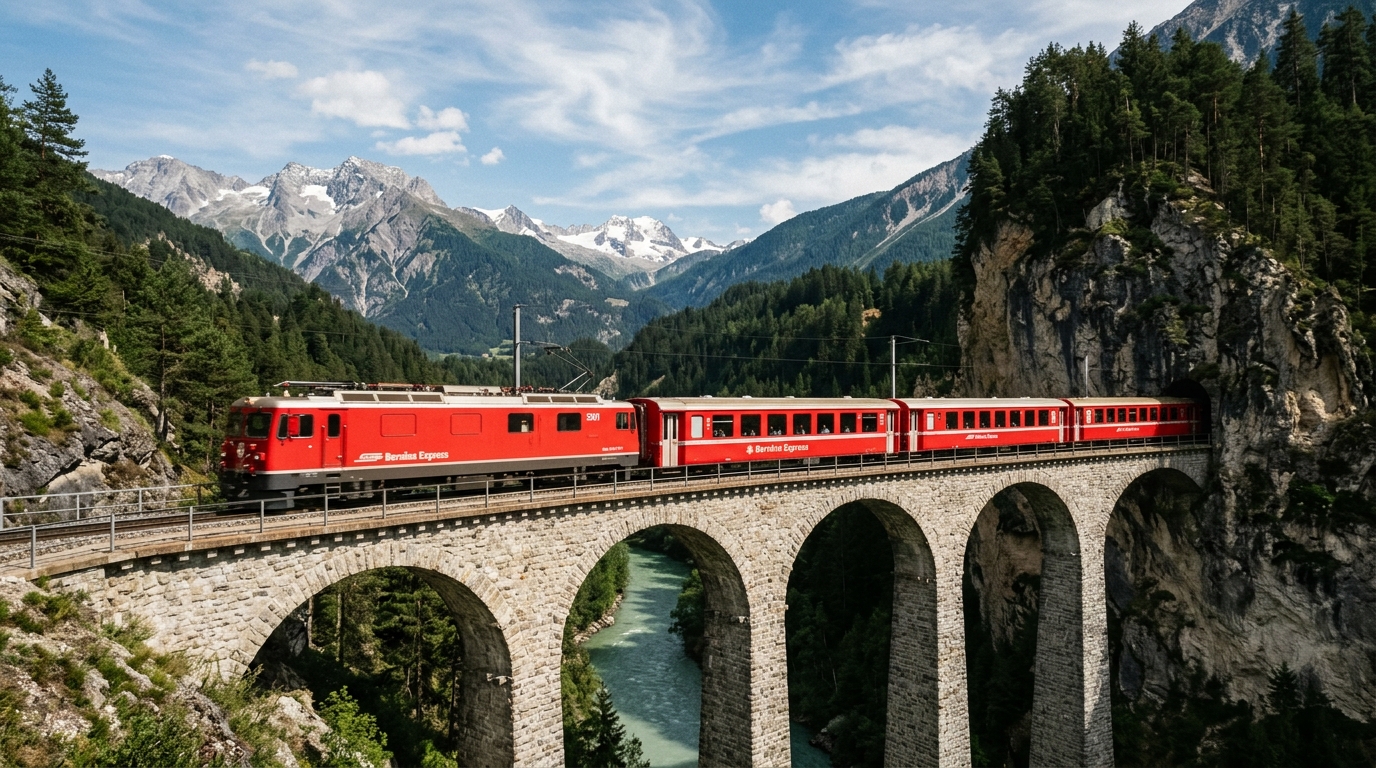
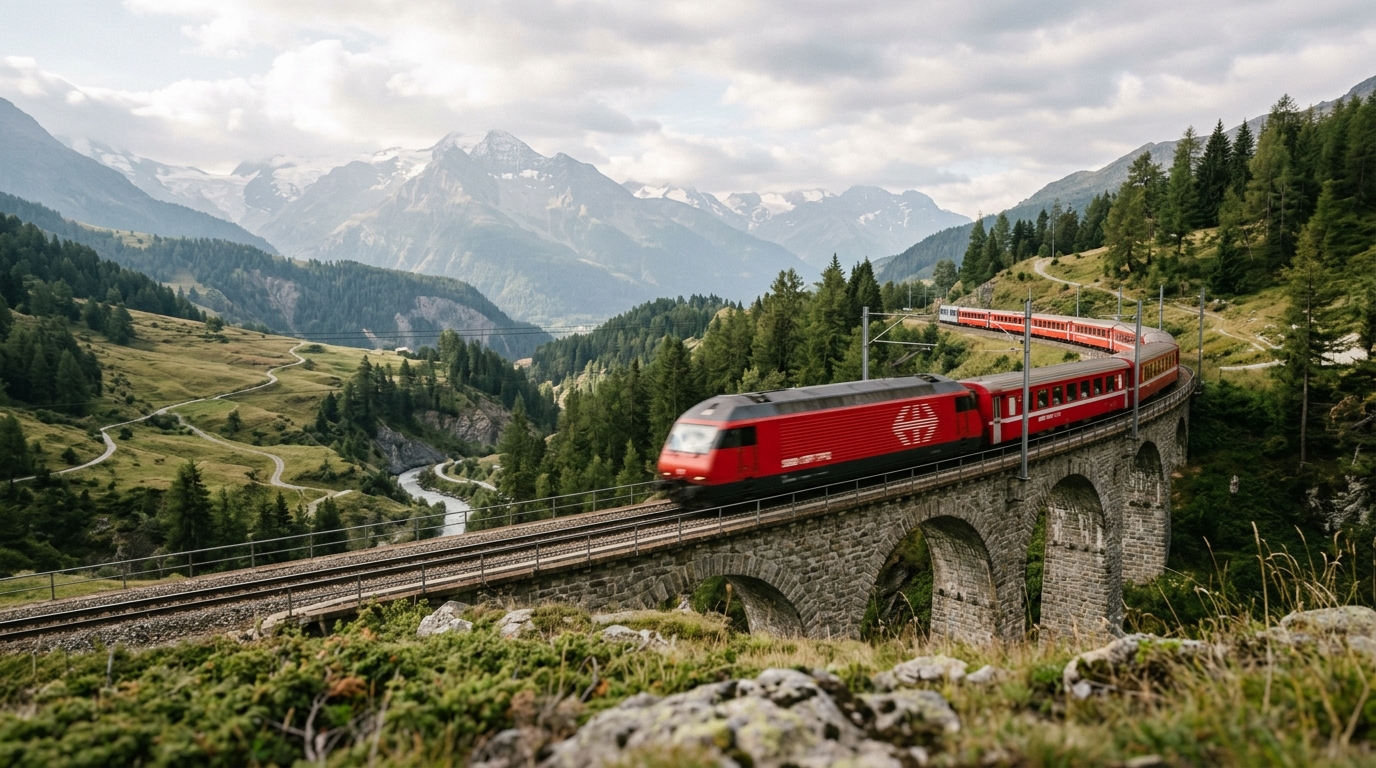
Switzerland has two types of rail experiences: the ones that get you there and the ones that are the "there." Practical routes, like the InterCity (IC) lines between Zurich and Geneva, use double-decker trains with "Silent Zones" and "Business Zones." They are fast, sleek, and efficient. But then you have the panoramic trains. The Glacier Express, the Bernina Express, and the Gotthard Panorama Express are designed for gawking. They feature floor-to-ceiling windows that curve into the roof so you don't miss a single limestone peak.
Do you actually need the "Express" versions? Not necessarily. For example, the Bernina Express runs on the same tracks as local regional trains. The local trains don't have the fancy windows or the audio commentary, but they do have windows that actually open. There is nothing quite like smelling the Alpine air as you click-clack over the Landwasser Viaduct. Regional trains cover the same scenic territory as famous panoramic lines but don't require expensive seat reservations. If you want the luxury experience, though, the Glacier Express "Excellence Class" is the gold standard of rail travel, featuring a five-course meal and a private bar.
- Glacier Express: Zermatt to St. Moritz (8 hours of slow-motion beauty).
- Bernina Express: Chur to Tirano (High-altitude glaciers to Italian palms).
- GoldenPass Express: Montreux to Interlaken (The new 2026 direct connection that changes gauge mid-track).
- Gotthard Panorama Express: A combination of a historic paddle steamer and a train ride through the old spiral tunnels.
Whichever you choose, remember that these scenic trains often require a supplement even if you have a pass. Reserve your panoramic seats on swissrail.net at least three months in advance during the summer peak.
Is 1st class worth the extra Francs?
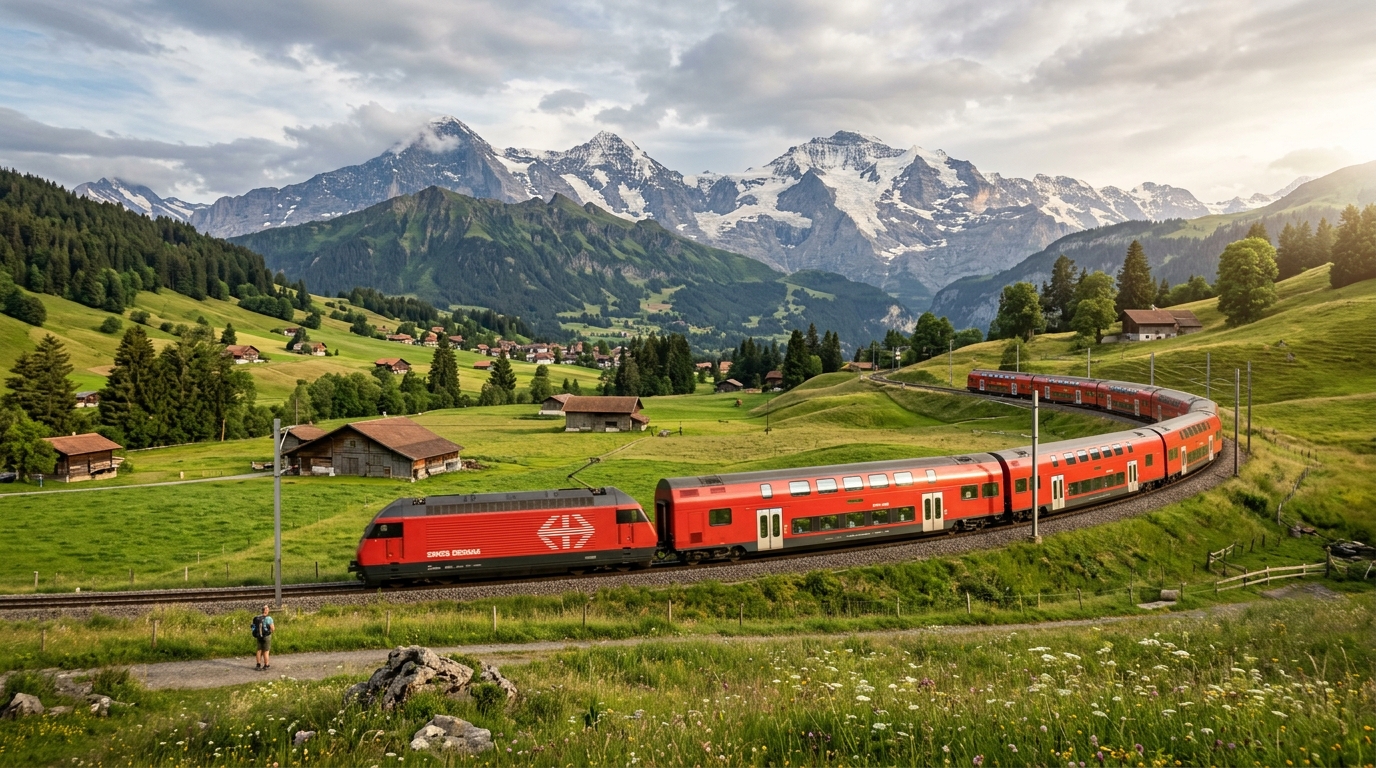
This is the question every traveler asks while staring at the price difference. In Switzerland, 2nd class is already better than 1st class in most other countries. The seats are clean, the upholstery is firm, and there is plenty of room for your bags. So why upgrade? 1st class offers a "2+1" seating configuration instead of "2+2." This means you get more elbow room and a better chance of a solo window seat. It is also significantly quieter, which matters on a three-hour haul across the country.
And then there is the "crowd factor." During the morning and evening rush hours (7:00–9:00 and 16:30–18:30), 2nd class can get legitimately packed with commuters. 1st class remains a sanctuary of calm. In 2026, the price gap for a 1st class upgrade on a standard InterCity trip is roughly 40% more than 2nd class. If you are traveling with a lot of luggage or celebrating a special occasion, the extra space for your suitcases and the peace of mind is a justifiable splurge. If you’re a backpacker on a budget, stick to 2nd class—you’re looking at the same mountains through the same windows anyway.
Life at the station: Habits and etiquette
Swiss stations are more than just transit points; they are the civic heart of the city. Most major stations house a "Coop Pronto" or "Migros" grocery store. These are lifesavers because they stay open late and on Sundays when the rest of the country shuts down. Grab a "Pretzel sandwich" and a Rivella (the local milk-whey soda—don't knock it 'til you try it) for a fraction of what you'd pay for a meal on the train.
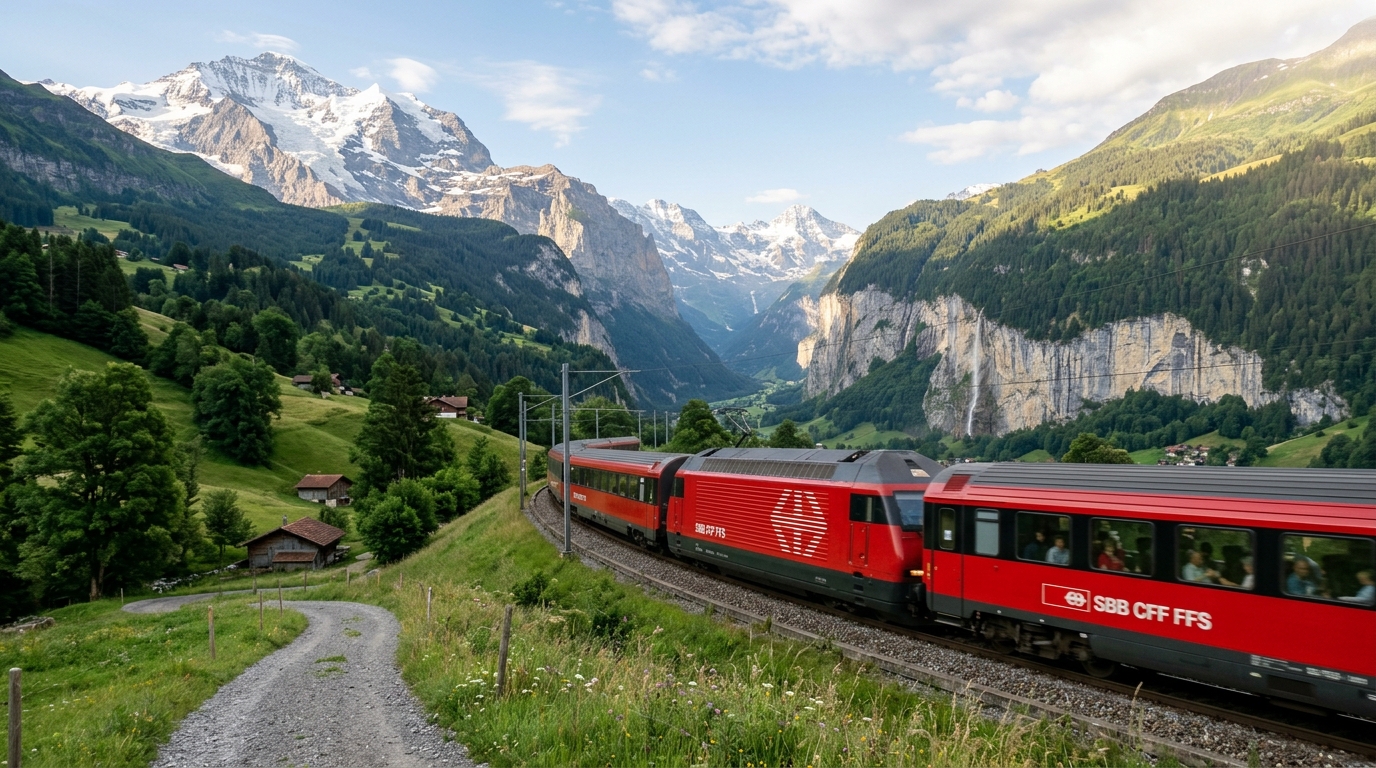
When you are standing on the platform, look at the blue overhead displays. They divide the platform into sectors: A, B, and C. A small diagram will show you exactly where the 1st class and 2nd class carriages will stop. Standing in the correct sector ensures you aren't that person sprinting down the platform with three suitcases as the train pulls in. Also, the Swiss value silence. If you are in a "Quiet Zone" (indicated by a picture of a person with a finger to their lips), do not take a phone call. The locals will not hesitate to give you a very polite, very firm "shush."
| Symbol | Meaning | Pro Tip |
|---|---|---|
| SBB CFF FFS | The National Railway | Look for this logo for all official help desks. |
| Sector A/B/C | Platform sections | Check the "Train Composition" board to find your car. |
| Piktogram: Cup | Bistro/Restaurant Car | Usually located in the center of the train. |
| Piktogram: Bicycle | Bike transport area | You usually need a separate ticket for your bike in 2026. |
Planning tips for your first Swiss trip
Don't overschedule yourself. It is tempting to try and see Zurich, Lucerne, Interlaken, and Zermatt in four days because the trains make it possible. But you’ll spend your whole trip looking at the world through a window. Pick a base—like Lucerne or Thun—and use the rail network for day trips. The SBB app is your best friend here. It gives you real-time platform changes, occupancy predictions (so you can avoid the crowded trains), and even tells you which side of the train has the best view on certain routes.
And what about luggage? If you are moving between hotels, look into the SBB luggage transfer service. For a reasonable fee, they will pick up your bags at your hotel in St. Moritz and deliver them to your hotel in Zermatt. You can spend your day hiking or exploring a village with nothing but a small daypack. Using the luggage transfer service allows you to turn a travel day into a full sightseeing day without the burden of heavy bags. You can check luggage service availability on swissrail.net when you book your tickets.
Frequently Asked Questions
How much does a Swiss Travel Pass cost in 2026?
A standard 4-day 2nd class Swiss Travel Pass costs approximately 281 CHF ($320). Prices scale up for 6, 8, or 15-day versions, and 1st class passes carry a premium of about 60%. You can find the most up-to-date 2026 pricing and purchase your pass at swissrail.net.
Do I need to reserve a seat on Swiss trains?
No, seat reservations are not required or common on standard InterCity or regional trains. You simply board and sit in any empty seat in your class. The only exceptions are international trains (like the TGV to Paris) and panoramic scenic trains like the Glacier Express. For those, booking a reservation on swissrail.net is mandatory.
Is the Swiss Travel Pass worth it for a 3-day trip?
Yes, if you plan on taking at least two long-distance trips and one mountain excursion like the Rigi or Stanserhorn. The pass covers the full cost of many mountain railways that would otherwise cost 70-100 CHF per person. Check the validity map on swissrail.net to see exactly which peaks are included for free.
Can I buy tickets at the station or should I buy online?
You can buy tickets at SBB machines or counters, but you will pay the highest "walk-up" price. Buying online in advance allows you to snag Supersaver deals and avoids the stress of navigating a machine while your train is boarding. For the best experience, buy your tickets and passes on swissrail.net before you arrive in Switzerland.
What is the difference between SBB, CFF, and FFS?
They are all the same company. SBB is the German acronym, CFF is French, and FFS is Italian. Since Switzerland has four official languages, the national railway uses all three on their branding to ensure everyone feels included. All these lines are covered by the same tickets and passes available at swissrail.net.
The bottom line on Swiss rail travel
Traveling by train in Switzerland is the rare instance where the reality actually lives up to the marketing. It is clean, it is impossibly beautiful, and it runs with a precision that makes you wish the rest of your life was managed by SBB engineers. Whether you are chasing the sunset on the GoldenPass or just commuting from the airport to downtown Zurich, the system is designed to be invisible. It just works. So, leave the rental car behind, grab a window seat, and let the Alps roll past your eyes. Your only real job is to make sure you don't get so distracted by the view that you miss your stop. Ready to start your Alpine adventure? Book your Swiss rail tickets and passes today at swissrail.net and get ready for the ride of a lifetime.