Swiss Train Booking Guide

Key Takeaway: Swiss train tickets for 2026 go on sale exactly 60 days in advance, with Supersaver fares starting as low as CHF 20 for routes like Zurich to Bern (1 hour). For most travelers visiting three or more cities, the Swiss Travel Pass offers the best value and total flexibility. Book your Swiss rail passes and tickets online to secure the steepest discounts before they sell out.
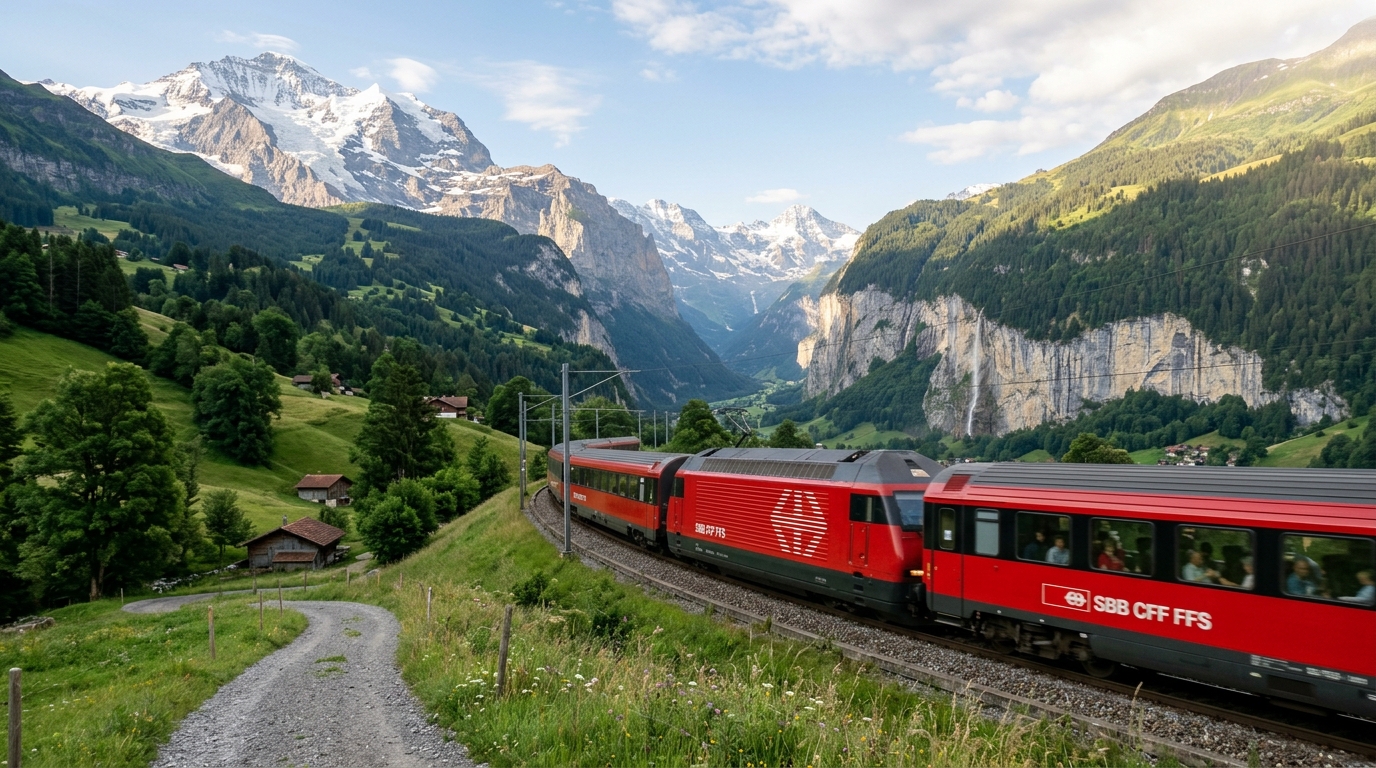
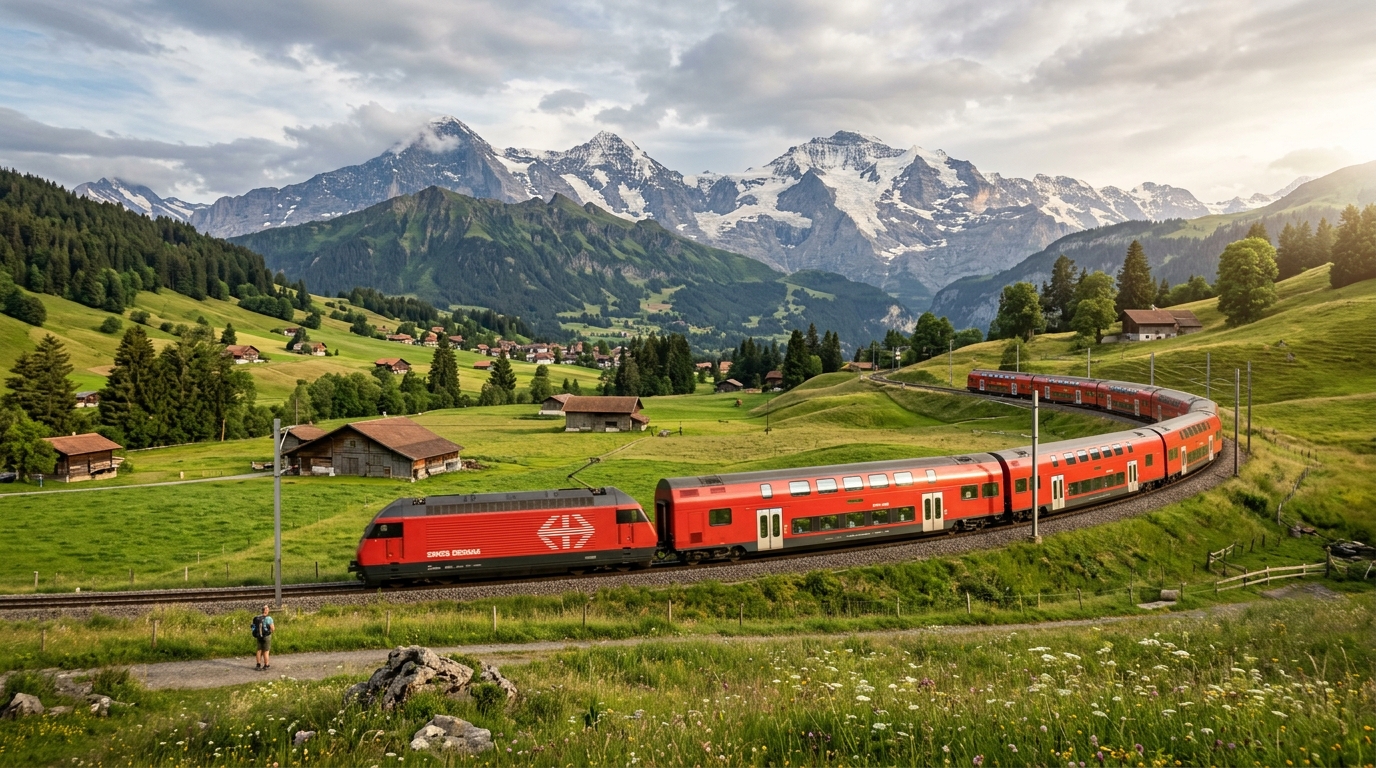
The morning mist clings to Lake Brienz as the red-and-white train glides silently toward Interlaken. You are sitting in a carriage where the windows are so clean they almost disappear, revealing peaks that look like they were painted by a romanticist. This isn't a dream; it is the reality of the Swiss Federal Railways (SBB), arguably the most efficient machine ever built by human hands. But even the best machines require a manual to operate without overpaying. Understanding the 2026 booking system is the difference between a stressful commute and a seamless Alpine adventure.
What You Need to Know About Swiss Trains at a Glance
- Advance Booking: Standard tickets are available 60 days before departure.
- Popular Routes: Zurich to Geneva (2h 45m), Zurich to Lugano (2h), Lucerne to Interlaken (2h).
- Price Range: Short hops start around CHF 15; long-distance Supersavers can be found for CHF 25–50.
- Reservations: Almost never required for domestic trains, but mandatory for scenic "Express" routes.
- Mobile Usage: Digital tickets are the gold standard; just show the QR code on your phone.
Checking the latest schedules is easy. View live 2026 Swiss train times on swissrail.net.
How Far Ahead Can You Book Swiss Train Tickets?
In Switzerland, the early bird gets the Supersaver. Most tickets enter the system exactly 60 days before the train leaves the station. Booking your 2026 tickets at the 60-day mark can save you up to 70% compared to walk-up fares. If you wait until the day of travel, you will pay the "Full Flex" price, which is fixed but significantly higher. For example, a last-minute ticket from Zurich to Zermatt might cost CHF 125, while an advance Supersaver could be as low as CHF 38.
But does every ticket follow this rule? Not exactly. While point-to-point tickets have a 60-day window, the Swiss Travel Pass can be purchased months in advance. This is a massive advantage for planners who want to lock in their 2026 budget early. Honestly, if you are visiting during the peak ski season or the height of summer, having your pass ready to go is one less thing to worry about at the airport. Secure your 2026 Swiss Travel Pass today at swissrail.net.
The "Supersaver" Secret
Supersaver tickets are the holy grail for budget-conscious travelers. These are tied to a specific train at a specific time. If you miss that 10:02 AM departure, your ticket becomes a very expensive piece of digital confetti. They are non-refundable and non-exchangeable. Use them for the "big" legs of your journey where you know exactly when you'll be moving from one city to the next.
Should You Buy a Swiss Travel Pass or Point-to-Point Tickets?
This is the question that keeps travelers up at night. The answer depends entirely on how much you value your freedom. The Swiss Travel Pass is effectively a "magic key" to the country. It covers trains, buses, boats, and even public transport in 90 cities. Plus, it grants free entry to over 500 museums. If you plan to move every two days, the pass is a no-brainer. However, if you are just taking one round trip between Zurich and Lucerne, individual tickets are cheaper.
| Route / Product | Standard Point-to-Point (2nd Class) | Swiss Travel Pass (3-Day) | Best Choice |
|---|---|---|---|
| Zurich to Interlaken (Round Trip) | CHF 150 | Included | Point-to-Point |
| Zurich-Lucerne-Interlaken-Bern-Zurich | CHF 240+ | CHF 244 (3 days) | Swiss Travel Pass |
| Geneva to Zermatt (One Way) | CHF 102 | Included | Swiss Travel Pass (if touring) |
The Swiss Travel Pass typically pays for itself if you take more than two long-distance journeys within its validity period. You can compare all 2026 pass options and buy your Swiss Travel Pass at swissrail.net.
Is First Class Worth the Extra Money in Switzerland?
Swiss second-class carriages are better than most countries' first-class options. The seats are firm, the legroom is generous, and the large windows are standard. So why upgrade? First class offers a 2+1 seating configuration, meaning more elbow room and a guaranteed quiet atmosphere. If you are traveling with large suitcases, first class is a lifesave because the luggage racks are rarely full. During the 2026 commute hours (7–9 AM and 5–7 PM), second class can get quite "cozy" with locals, while first class remains a sanctuary.
I usually tell my friends to stick to second class for short trips under an hour. Save your money for a nice fondue dinner in Gruyères. But for the long haul from Geneva to Lugano, that extra space is worth every centime. The quiet zones in first class are strictly enforced—don't even think about taking a phone call there. It is the perfect environment to watch the mountains roll by in peace.
Do You Really Need a Seat Reservation?
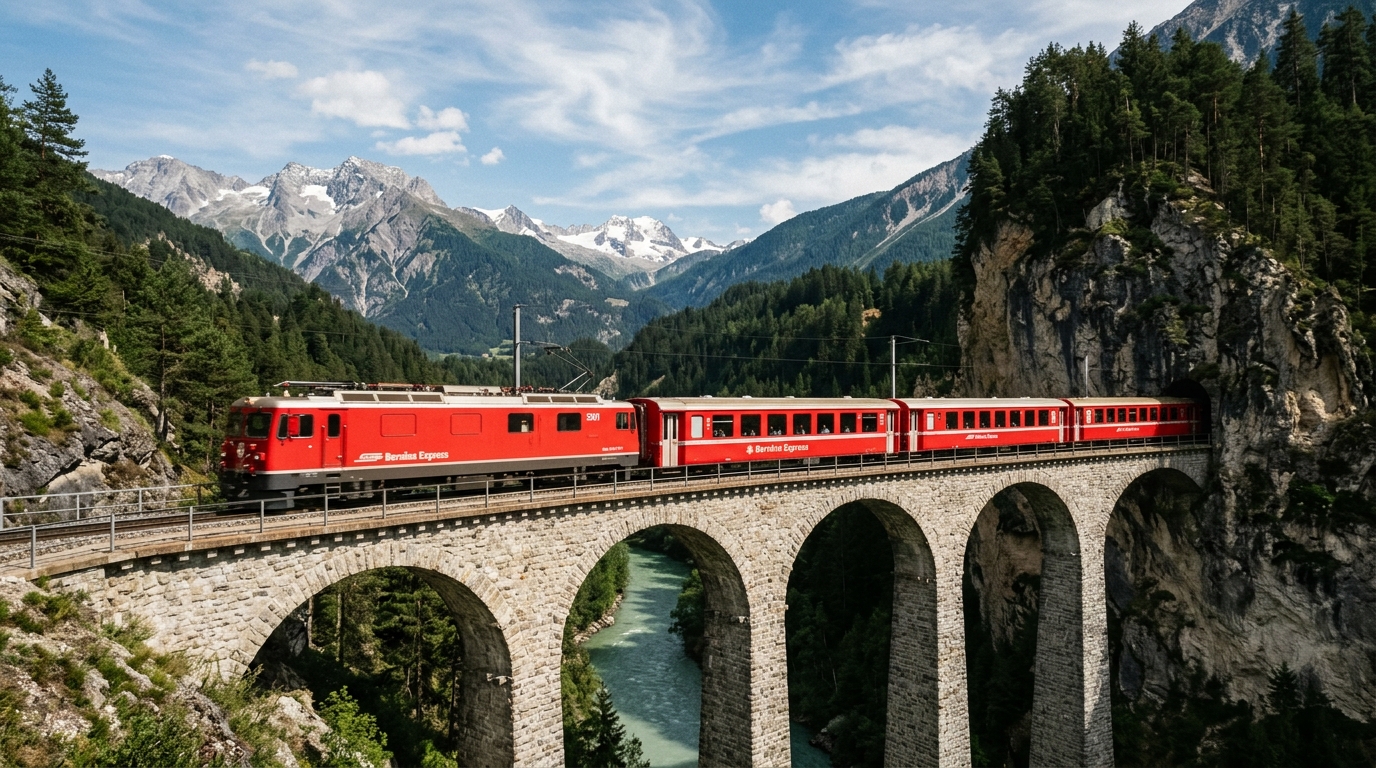
Here is a refreshing fact: you almost never need a reservation in Switzerland. Unlike in France or Italy, your ticket is for the route, not a specific seat. You just hop on, find an empty chair, and enjoy the ride. If a seat is reserved, there will be a small paper slip or a digital display above the window. If it's blank, it's yours. Seat reservations are only mandatory on specialized panoramic trains like the Glacier Express or the Bernina Express.
For standard intercity trains between Zurich and Bern, a reservation costs about CHF 5. Is it worth it? Probably not. Even on busy Fridays, you can usually find a seat if you walk toward the ends of the train. The middle carriages are always the most crowded because people are lazy. Walk an extra 50 meters down the platform and you'll likely have a row to yourself. For those mandatory scenic routes, book your 2026 panoramic seat reservations at swissrail.net.
Comparing the Major 2026 Swiss Rail Routes
The Swiss network is a web of efficiency connecting the high-tech hubs of the north with the palm-fringed lakes of the south. Each route has its own personality and logistical quirks. When planning your 2026 itinerary, look at the frequency—most of these trains run every half hour, so you are never stranded for long.
Zurich to Geneva: The Business Backbone
This route cuts across the "Plateau" of Switzerland. It takes about 2 hours and 45 minutes. You'll see rolling hills and vineyards rather than jagged peaks. It is the most frequent long-distance service in the country. The Zurich to Geneva line is the best place to find 2026 Supersaver deals due to the high volume of trains.
Lucerne to Interlaken: The Scenic Shortcut
This is part of the GoldenPass line. The "Luzern-Interlaken Express" features massive panoramic windows. It climbs over the Brünig Pass and skirts the edges of three different lakes. It takes about 2 hours. If you have a Swiss Travel Pass, this ride is completely free. It is arguably the best "bang for your buck" journey in the country. Check the 2026 GoldenPass schedule at swissrail.net.
Zurich to Lugano: The Mediterranean Dash
Thanks to the Gotthard Base Tunnel—the longest rail tunnel in the world—you can go from the German-speaking north to the Italian-speaking south in just 2 hours. One minute you are looking at gray skies and concrete; the next, you emerge into sunlight and palm trees. It is a literal 2026 time-travel experience. Traveling through the Gotthard Base Tunnel saves you an hour compared to the old mountain route.
| Route | Duration | Frequency | Scenery Level |
|---|---|---|---|
| Zurich to Bern | 56 min | Every 30 mins | Moderate |
| Bern to Interlaken | 52 min | Every 30 mins | High |
| Geneva to Montreux | 1h 00m | Every 15-30 mins | Stunning (Lake Geneva) |
| Lucerne to Zurich | 41 min | Every 30 mins | Low/Moderate |
Common Booking Mistakes to Avoid in 2026
- Buying the Half-Fare price by accident: The SBB website often defaults to the Half-Fare price (for locals who own a discount card). If you don't have that card, your ticket is invalid. Always check that you are paying the "Full Fare" unless you have purchased a Half-Fare Card.
- Ignoring the "Short Trip" tickets: If you are just going two stops on a tram in Zurich, don't buy a full-day pass. Look for the "Kurzstrecke" option.
- Overestimating the need for 1st Class: As mentioned, 2nd class is excellent. Don't blow your budget on upgrades unless you really need the luggage space.
- Forgetting the "Grand Train Tour" logic: Many people book point-to-point tickets for the Glacier Express but forget they still need a separate seat reservation. You need both!
- Not validating your paper pass: If you opt for a physical Swiss Travel Pass instead of a digital one, you must have it stamped/validated before your first journey. Digital passes from swissrail.net avoid this headache entirely.
How to Use Mobile Tickets Effectively
In 2026, paper is practically vintage. When you buy through swissrail.net, you receive a PDF with a QR code. You don't even need to print it. Just save it to your phone's wallet or keep the email handy. When the conductor comes by—and they always do—simply show them the code. They will scan it, nod politely, and move on. Make sure your phone is charged; a dead battery is not a valid excuse for not having a ticket. Most long-distance Swiss trains have power outlets at every seat (even in 2nd class) to help you out.
Pro Tips for the Savvy Rail Traveler
- The "Mt. Rigi" Trick: If you have a Swiss Travel Pass, the cogwheel train up to Mt. Rigi is 100% free. Most other mountain excursions like Pilatus or Titlis only offer a 50% discount.
- Luggage Transfers: Don't haul your bags. SBB offers a "Station-to-Station" luggage service. You drop your bags in Zurich in the morning and pick them up in Zermatt that evening for a small fee.
- The Boat Bonus: Your Swiss Travel Pass works on the lake steamers in Thun, Brienz, and Lucerne. It is the most relaxing way to "commute" between villages.
- Download the SBB App: While you should book your main 2026 passes at swissrail.net, use the official app for platform numbers and real-time delay alerts.
- Travel during "Edge" seasons: May and September offer the best balance of manageable crowds and beautiful weather. The trains are emptier, and the 2026 Supersaver fares are more abundant.
- The Left Side/Right Side Rule: On the route from Bern to Brig, sit on the right side for the best views of the valley as you descend.
Frequently Asked Questions
How much does a Swiss Travel Pass cost for 2026?
A 3-day 2nd class Swiss Travel Pass starts at approximately CHF 244. Prices increase based on the number of days (up to 15) and whether you choose 1st class. You can check the exact 2026 pricing for all pass durations at swissrail.net.
Can I buy Swiss train tickets at the station?
Yes, every station has blue touch-screen machines or a staffed counter, but you will pay the highest possible price. Advance tickets on swissrail.net are almost always cheaper than walk-up fares. Plus, the machines can be confusing if there is a line of locals behind you.
Is the Swiss Half Fare Card worth it for a one-week trip?
The Half Fare Card costs CHF 120 and gives you 50% off all tickets for a month. It usually pays for itself if you plan on doing expensive mountain excursions like the Jungfraujoch, which can cost over CHF 200 round-trip. If you are doing a mix of cities and high-altitude peaks, the Half Fare Card is often the mathematical winner.
Do I need to book the Glacier Express months in advance?
Yes, seat reservations for the Glacier Express often sell out weeks or even months ahead for peak 2026 dates. While the ticket itself is covered by the Swiss Travel Pass, the mandatory reservation fee is separate and should be secured as soon as your travel dates are firm. Book your 2026 scenic train reservations early at swissrail.net.
What happens if I miss my train in Switzerland?
If you have a "Full Flex" point-to-point ticket, you can simply hop on the next train on the same route. If you have a "Supersaver" ticket, your ticket is void and you must buy a new one at the current rate. Swiss trains are incredibly punctual, so being "on time" actually means being on the platform three minutes before departure.
Ready to Explore the Alps?
Traveling through Switzerland by rail is a rare pleasure where the journey truly is the destination. Whether you are chasing the sunset across Lake Geneva or tunneling through the heart of the Eiger, the system is designed to work for you. Don't leave your 2026 budget to chance by waiting until you arrive. By booking early and choosing the right pass, you can spend less time staring at ticket machines and more time staring at the Matterhorn. Visit swissrail.net now to book your 2026 Swiss train tickets and passes and start your Alpine journey with confidence.