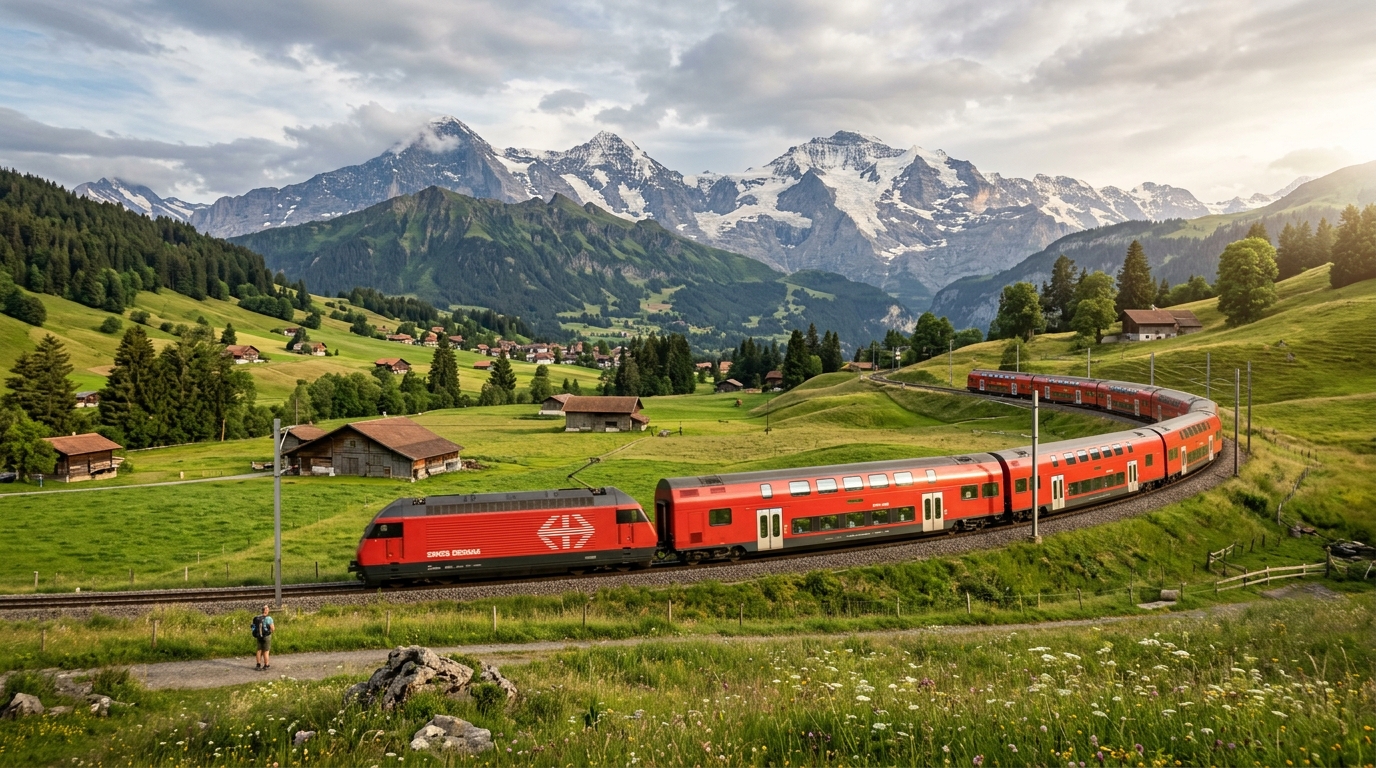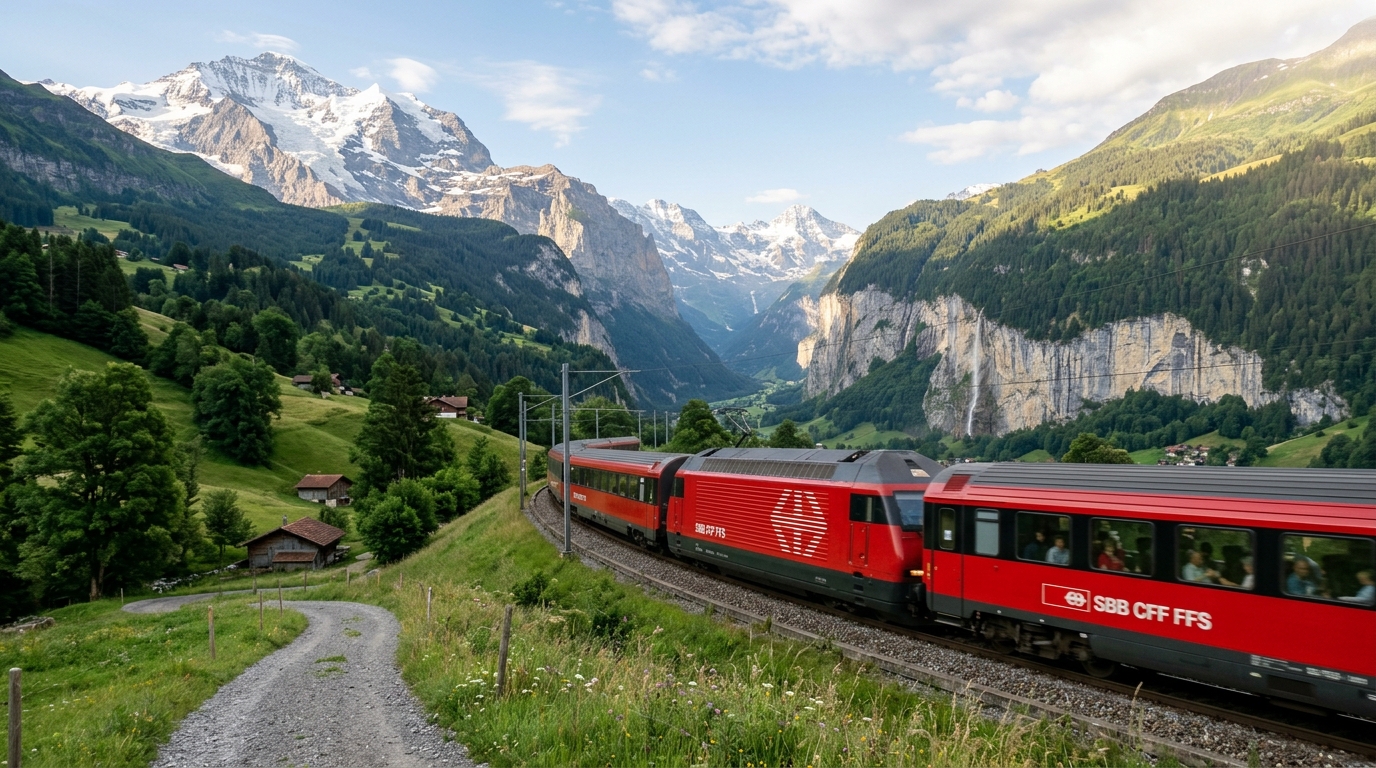
Bern to Interlaken Train Guide
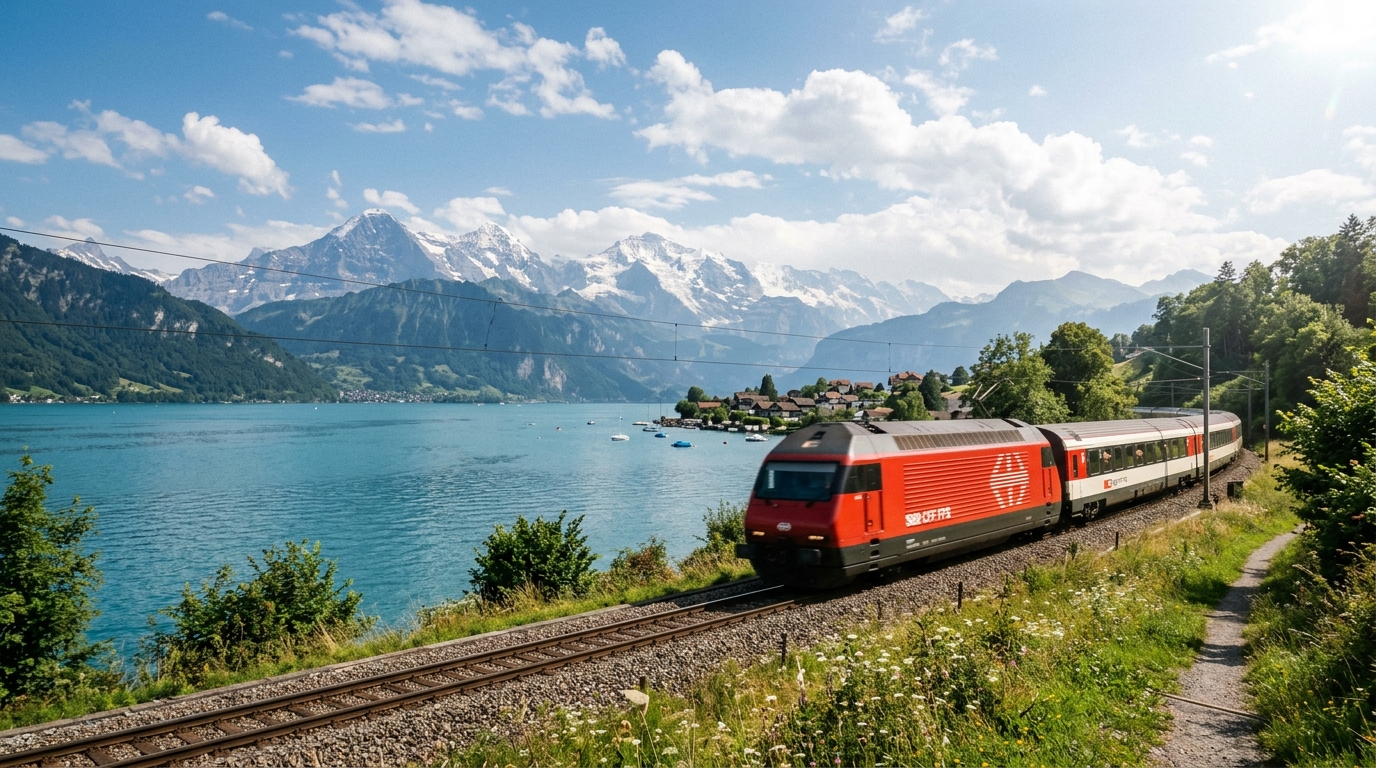
Key Takeaway: The train from Bern to Interlaken runs every 30 minutes, takes exactly 52 to 55 minutes, and costs roughly CHF 29.00 for a standard one-way ticket in 2026. For the best views of Lake Thun, always sit on the left-hand side of the train when departing Bern. Book your Swiss train tickets online to secure the best "Supersaver" rates before they sell out.
Bern is a city of sandstone arcades and slow-moving rivers, but the mountains are always calling from the horizon. You can feel the atmosphere change the moment you step onto the platform at Bern Hauptbahnhof. The air feels sharper, and the commuters are replaced by hikers clutching walking poles. This 55-minute sprint is more than just a transit link; it is the definitive transition from the Swiss plateau to the jagged heart of the Bernese Oberland. If you are heading for the Eiger or the Jungfraujoch, this is where the real journey begins.
Quick Overview: Bern to Interlaken Train Essentials
Most travelers are surprised by how efficient this route actually is. You can finish a coffee in Bern and be standing at the foot of the Alps before the caffeine even kicks in. Here is the data you need for 2026 travel planning.
| Feature | Detail | Recommendation |
|---|---|---|
| Fastest Travel Time | 52 Minutes | Take the direct IC6 or IC61 lines. |
| Frequency | Every 30 Minutes | No need to stress if you miss one. |
| Standard One-Way Fare | CHF 29.00 | Check prices on swissrail.net |
| Best Side for Views | Left Side (Facing Forward) | Essential for Lake Thun views. |
| Arrival Stations | Interlaken West & Ost | Stay on until Ost for mountain trains. |
The direct InterCity (IC) trains are the gold standard for this route, offering power outlets and ample luggage racks for heavy suitcases. You will find these trains departing from Bern usually twice an hour, headed toward either Interlaken Ost or Brig. If you end up on a Brig-bound train, you will simply change at Spiez—a seamless three-minute hop across the platform. Book your point-to-point tickets here to ensure you have the right fare for your specific time slot.
How Much Does the Train from Bern to Interlaken Cost?
Swiss rail pricing can feel like a moving target if you aren't familiar with the system. In 2026, a standard full-fare second-class ticket from Bern to Interlaken Ost costs CHF 29.00. But honestly, almost nobody pays full fare in Switzerland. If you have a Half Fare Card, that price drops immediately to CHF 14.50.
But what if you want it cheaper? Look for "Supersaver" tickets on the schedule. These are capacity-controlled fares tied to a specific train time. You might snag a seat for as little as CHF 9.00 if you book several weeks in advance. The trade-off is flexibility; if you miss that specific train, your ticket is essentially a piece of digital scrap paper. For leisure travelers who want to wander Bern’s old town without a ticking clock, the standard fare is usually worth the extra few francs for the freedom it provides. Check current 2026 prices on swissrail.net to see if any Supersaver deals are active for your dates.
2026 Pricing Comparison Table
| Ticket Type | Price (Approx. 2026) | Flexibility | Best For... |
|---|---|---|---|
| Standard Fare | CHF 29.00 | High (Any train that day) | Spontaneous explorers |
| Half Fare Card Price | CHF 14.50 | High (Any train that day) | Anyone staying 3+ days |
| Supersaver Ticket | From CHF 8.80 | Zero (Specific train only) | Budget-strict planners |
| Swiss Travel Pass | Included | Unlimited | Maximum convenience |
Which Side of the Train Should You Sit On?
This is the most common question I get, and the answer is definitive. When you leave Bern, the train heads south through the Aare valley. For the first twenty minutes, the scenery is pleasant but mostly consists of rolling hills and small villages. Once you pass through the tunnel after Thun, however, the world opens up.
Sit on the left-hand side of the train to get an unobstructed view of the turquoise waters of Lake Thun. As the train hugs the shoreline between Spiez and Interlaken, you will see the Niesen (the "Swiss Pyramid") and the high peaks of the Oberland reflecting in the water. If you sit on the right, you will mostly be looking at rock walls and the backs of lakeside cottages. It is a small detail that makes a massive difference in the "wow" factor of your arrival.
Do you need to reserve a seat? Probably not. Even in the height of the 2026 summer season, these trains are frequent enough that you can usually find a spot. However, if you are traveling in a group of four and want a "vis-à-vis" table seat, a reservation might save you some frantic searching during the morning rush. Reserve your seats online if you are traveling with a large family or lots of gear.
First Class vs. Second Class: Is it Worth the Upgrade?
Swiss second-class carriages are better than most first-class cabins in North America or the UK. They are clean, quiet, and feature large windows. So, why pay more for first class? On the Bern to Interlaken run, the primary benefit is space. First-class cars have a 2-1 seating configuration instead of 2-2, meaning wider seats and more elbow room.
During peak tourist hours (8:00 AM to 10:00 AM), second class can get crowded with backpackers and tour groups. If you value silence and want a guaranteed window seat without fighting for it, the upgrade is a luxury that won't break the bank. In 2026, the first-class fare is roughly CHF 51.00. Is it a game-changer for a 50-minute ride? Not really. But if you have a Swiss Travel Pass in first class, you’ll certainly appreciate the quieter upper deck of the double-decker trains. Upgrade your ticket on swissrail.net if you want that extra bit of calm.
Navigating the Stations: Bern Hbf to Interlaken Ost
Bern Hauptbahnhof is a bit of a labyrinth. It is a multi-level station where the local S-Bahn trains live underground and the long-distance InterCity trains depart from the main platforms (usually platforms 1 through 9). Check the blue overhead monitors for "Interlaken Ost." Make sure you don't accidentally board a train only going as far as Thun or Spiez, though even if you do, the connection is easy.
When you reach Interlaken, you have two choices: Interlaken West and Interlaken Ost. This confuses people every single day. Here is the rule of thumb:
- Get off at Interlaken West if your hotel is in the town center, near the casino, or if you are catching a boat cruise on Lake Thun.
- Stay on until Interlaken Ost if you are transferring to the mountain trains for Lauterbrunnen, Grindelwald, or the Schynige Platte.
Interlaken Ost is the true gateway to the peaks, and it is where the standard-gauge Swiss Federal Railways (SBB) tracks end. From here, the tracks turn into narrow-gauge cogwheel railways managed by the Jungfrau Railways. Book your tickets to Interlaken Ost to ensure you are positioned perfectly for the mountains.
How to Continue into the Jungfrau Region
Interlaken is beautiful, but most leisure travelers use it as a base camp rather than the final destination. Once you step off the train at Interlaken Ost, you are only steps away from the blue and yellow Berner Oberland Bahn (BOB) trains. These trains split at Zweilütschinen—one half goes to Grindelwald, the other to Lauterbrunnen.
Check the signs on the side of the carriage carefully before you sit down. The train is literally uncoupled in the middle of the journey. If you are in the wrong half, you will end up in a completely different valley. It sounds stressful, but the station staff are used to confused tourists and the signage is incredibly clear. In 2026, these connections are timed to depart about 5 to 8 minutes after the train from Bern arrives. It’s a tight window, but Swiss trains are built for these "pulse" connections. Buy your Jungfrau region passes in advance to skip the ticket machine lines at the station.
Using the Swiss Travel Pass on This Route
If you are holding a Swiss Travel Pass, the Bern to Interlaken route is effectively "free." You just hop on any train, sit in your designated class, and show your QR code when the conductor walks by. This is the ultimate way to travel because it removes the stress of fixed schedules.
But does the math work? If you are only doing a day trip from Bern to Interlaken and back, a Swiss Travel Pass is overkill. In that case, a simple Day Pass or a Half Fare Card is better. However, if Interlaken is just the start of a week-long Alpine tour, the Swiss Travel Pass is indispensable. It covers the train from Bern, the boats on Lake Thun and Lake Brienz, and the trains up to Wengen and Mürren. Order your Swiss Travel Pass online to have it ready on your phone the moment you land.
Pro Tips for a Smooth Journey
- The Spiez Stopover: If you have time, get off the train in Spiez. It is widely considered one of the most beautiful bays in Europe. You can walk down to the castle, have a glass of local wine, and catch the next train 30 minutes later using the same standard ticket.
- Luggage Logic: Most IC trains have luggage racks at the ends of the carriages and in the middle. If those are full, there is usually space between the seat backs (placed back-to-back). Don't leave your bags in the vestibules where they block the doors.
- The "SBB Mobile" App: While you should book your main tickets at swissrail.net, downloading the official app is great for checking real-time platform changes or delays while you are on the move.
- Coffee with a View: Most IC trains have a bistro car or a Starbucks-branded machine. Grab a coffee and head to the upper deck. The windows are slightly curved at the top, giving you a better view of the mountain peaks as they appear.
- Avoid the Commuter Rush: If possible, avoid the 4:30 PM to 6:00 PM window on weekdays. This is a major commuter route for people living in the Oberland and working in Bern. The trains can get surprisingly "bustling" (to use a word I usually avoid) during these times.
- Check the Weather Webcams: Before you leave Bern, check the live webcams for "Jungfraujoch" or "Schilthorn." Sometimes Bern is sunny while the mountains are trapped in clouds, or vice versa. Don't waste the fare if the visibility is zero.
Frequently Asked Questions
How often do trains run from Bern to Interlaken?
Trains depart every 30 minutes throughout the day. In 2026, the schedule is very consistent, with departures typically at .04 and .39 past the hour from Bern Hauptbahnhof. You can check the exact live timetable and book your tickets at swissrail.net.
Do I need to book my train ticket in advance?
No, you can buy a ticket three minutes before departure at the station. However, booking in advance on swissrail.net allows you to access Supersaver fares, which can save you over 50% on the standard ticket price. If you want the lowest price, book at least 14 days ahead.
Which Interlaken station is better?
Interlaken Ost is generally better for tourists. It is the hub for all mountain trains heading to Grindelwald, Lauterbrunnen, and Wengen. Interlaken West is closer to the main shopping street and the boat docks for Lake Thun. Most InterCity trains stop at both, so you can decide as you arrive.
Is the Bern to Interlaken train scenic?
The second half of the journey is spectacular. Once the train reaches the shores of Lake Thun, you get panoramic views of the water and the Bernese Alps. For the best experience, sit on the left side of the train when traveling from Bern toward Interlaken. Secure your window seat by booking early.
Can I use a Eurail pass on this route?
Yes, the Eurail and Interrail passes are fully valid on the SBB trains between Bern and Interlaken. You do not need to pay a supplement or a reservation fee; simply board the train and add the journey to your travel diary. Note that Eurail only provides discounts, not full coverage, once you go past Interlaken into the private mountain railways.
How much luggage can I bring on the train?
There is no formal weight limit for luggage on Swiss trains. As long as you can carry it yourself and store it in the overhead racks or designated luggage areas, you are fine. If you have massive suitcases, look for the "Family" carriages which often have more floor space. Check for train amenities on swissrail.net before you travel.
The Verdict: Why This Route Matters
The train from Bern to Interlaken is the quintessential Swiss rail experience. It is efficient, punctual to the second, and increasingly beautiful with every kilometer. You move from the political heart of the country to its geological soul in less time than it takes to watch a movie. Whether you are a solo hiker with a backpack or a family looking for the ultimate mountain photo, this route is your golden ticket. It is the bridge between the urban Swiss life and the Alpine dream. So, grab a seat on the left, keep your camera ready, and prepare for the mountains to rise up and meet you. Start your Swiss adventure by booking your tickets today.